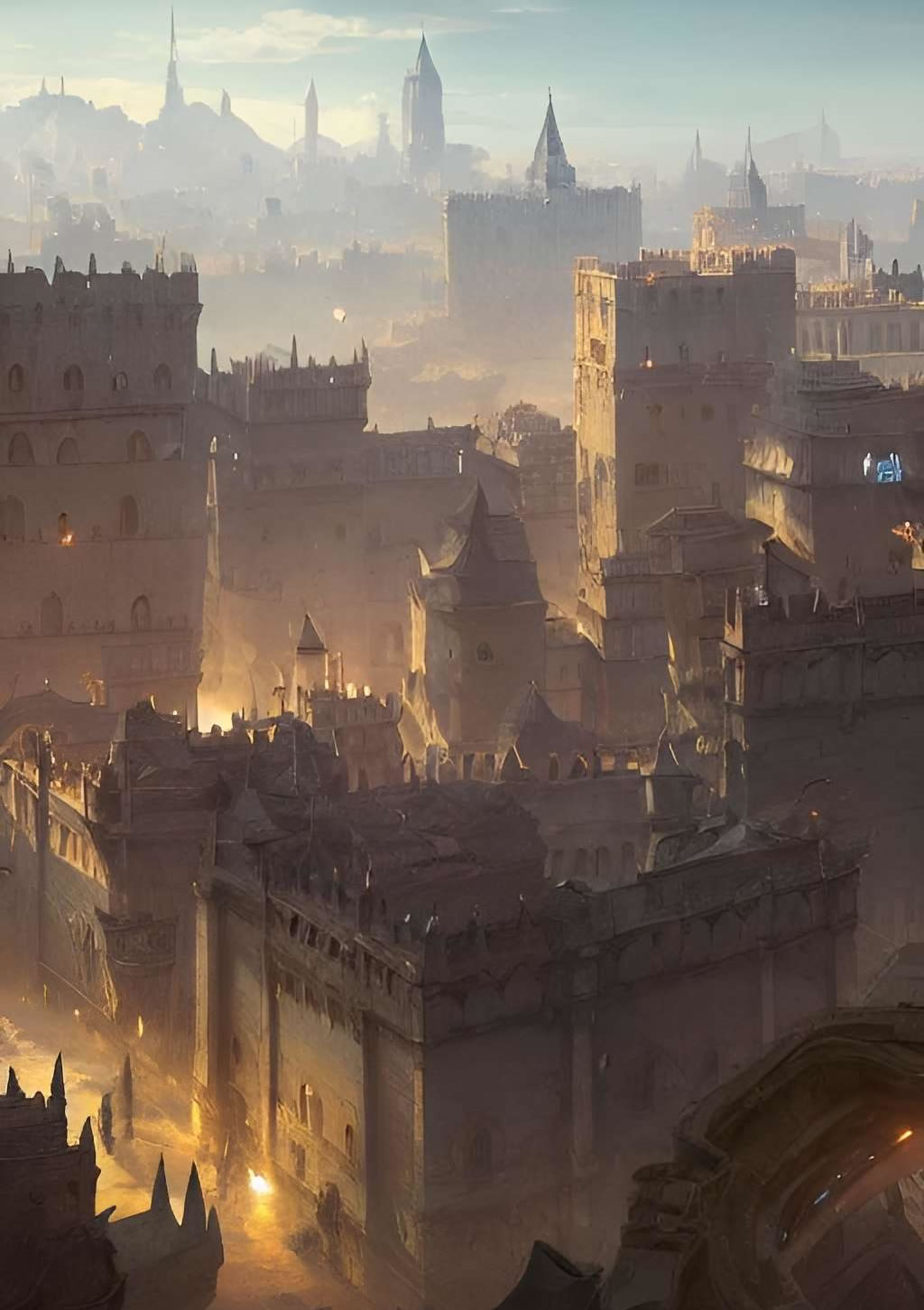
Every citizen of Permatu is taught the same principle from childhood:
No life is without value.
Physical weakness, illness, affliction, poverty, emotional instability, or fractured minds are not viewed as burdens to be discarded, but problems to be understood and healed. In Permatu, usefulness is not measured solely by strength or wealth. Every person is expected to contribute what they can, and every person is believed capable of becoming more than they currently are.
This philosophy transformed what was once one of the most tragic regions of old Keridwyn into one of the most prosperous.
During the final centuries of the kingdom’s reign, the lands that would become Permatu were ravaged by plague. Entire communities vanished beneath waves of sickness. Roads emptied. Farms rotted. The region was widely believed to be doomed.
Yet healers came anyway.
Physicians, alchemists, herbalists, miracle workers, priests, scholars, and wandering caretakers traveled from across the kingdom with a single shared purpose: save whoever could still be saved.
For years they labored without rest.
They studied symptoms relentlessly. They performed dangerous experiments. They buried friends and patients alike while refusing to surrender. Through tireless effort and collective sacrifice, the plague was eventually eradicated.
Many of the greatest healers chose to remain afterward, founding the famed Wright’s Academy of Healing Arts and Magics.
Under the academy’s guidance, the region flourished with astonishing speed. Fertile soil spread across once-blighted lands. Harvests became abundant. Weather patterns stabilized beneath the work of ritualists and druids. Communities rebuilt stronger than before.
Soon, Permatu became synonymous with healing throughout the continent.
Not merely healing of flesh, but healing of the spirit and mind as well.
The physicians of Permatu believe true medicine cannot treat the body alone. Emotional suffering, trauma, destructive lifestyles, magical corruption, and spiritual instability are considered equally important. Their treatments often involve therapy, environmental changes, ritual practices, social rehabilitation, and long-term care in addition to conventional medicine.
In the later days of Keridwyn, even nobles and generals traveled to Permatu seeking treatment for conditions no other city could cure.
When the alliance between the cities collapsed, Permatu refused to close its borders.
Refugees, wounded soldiers, plague victims, orphans, and the destitute continued to receive aid freely despite growing instability across the realm. Their compassion quickly made them a target.
Raiding parties from less principled cities repeatedly struck Permatu during the early years of the collapse. Medical supplies, alchemical ingredients, healers, and food stores were stolen regularly. Pacifism alone proved insufficient protection.
Reluctantly, Permatu formed an armed defense force under Captain Kiana.
Even now, however, the city remains remarkably restrained compared to its neighbors.
Permatuns value people far above material wealth. All citizens are expected to work in ways that benefit society. Those unable to find purpose independently are assigned roles by the republic based on their abilities and needs.
Farming, counseling, ritual weather shaping, education, rehabilitation, and public care are among the most respected professions within the city.
Above them all stands the mysterious Guild of Life.
Membership within the Guild is considered the highest honor a healer can attain. Only the most gifted are invited, and those accepted speak little of what occurs within its sealed halls.
Spies sent to uncover the guild’s secrets rarely return.
The sole surviving report recovered from such attempts referenced only a single phrase:
“The Symbiote.”
The city itself is governed through an open parliamentary system. Public debate is common, and town hall sessions are frequently attended by ordinary citizens. Education and medical treatment are freely available to all who seek them.
Though compassionate, Permatu is not naïve.
Criminal investigations are meticulous and patient, but punishments are severe once guilt is proven. Exile and forced service remain common sentences for major crimes. Laws are intentionally few in number, designed to remain simple, strict, and difficult to manipulate.
Overall crime rates remain exceptionally low.
Unfortunately, Permatu’s reputation for healthy citizens and advanced healing has made it highly attractive to traffickers, cultists, blood mages, and other predatory groups who view its people as valuable resources.
As a result, Permatu’s defenders have become far more experienced with violence than the city publicly admits.
The population remains highly diverse, though Angels, Elves, Cog, Rodentfused, Shimmer, and Rettocuru are especially common due to natural healing affinities or resistance to disease.
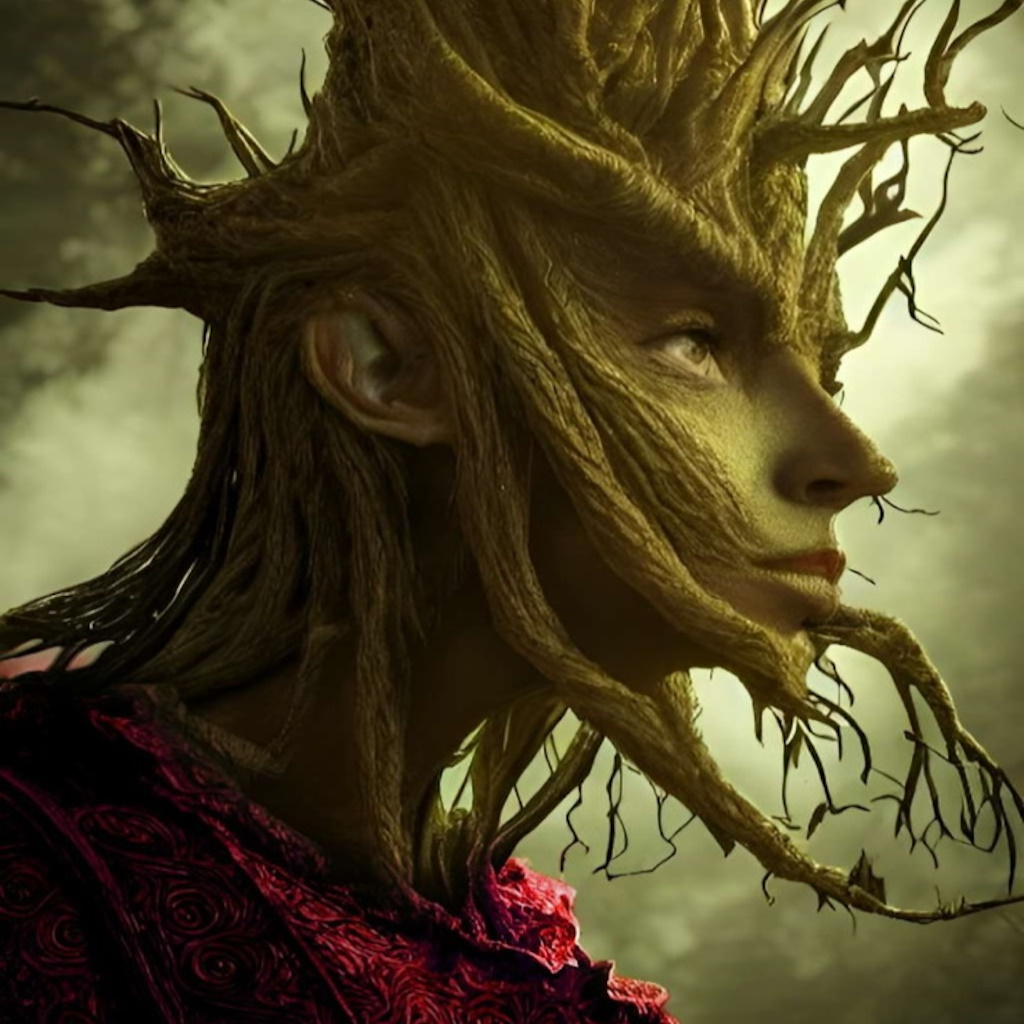
Jinmenju is widely regarded as one of Permatu’s most admired citizens.
Elegant, charitable, politically active, and endlessly composed, she possesses deep connections among influential merchants, innkeepers, restaurateurs, and landowners throughout the city.
Her Flora lineage bears unusually strong Shade influence. Red lotus blossoms bloom from branches whose shadows seem unnaturally deep, while her preference for luxurious crimson dresses makes her presence impossible to ignore.
Among Flora, such vanity is considered unusual.
Among everyone else, it is considered unforgettable.
Jinmenju appears to embody the highest ideals of Permatu. She cares personally for numerous orphaned children despite expecting nothing in return. Her alchemical workshops produce salves, medicines, and restorative elixirs renowned throughout neighboring cities.
Her caravans regularly travel to Crossroads, Tordab, and beyond, distributing Permatu’s medical aid across the fractured lands.
She participates actively in public life as well, attending formal gatherings, social debates, and even wrestling competitions where she attempts — often unsuccessfully — to guide less civilized individuals toward more refined behavior.
During parliamentary sessions, Jinmenju consistently advocates diplomacy, restraint, and compassion over vengeance or fearmongering.
She is, by every visible measure, the image of civilized virtue.
Which naturally explains why so many rumors surround her.
Whispered accusations tie her family to blood rituals, magical narcotics, smuggling operations, disappearances, and trafficking rings hidden beneath the polished surface of Permatu’s prosperity.
Of course, no evidence has ever been produced.
And in Permatu, accusations without evidence are treated very seriously.
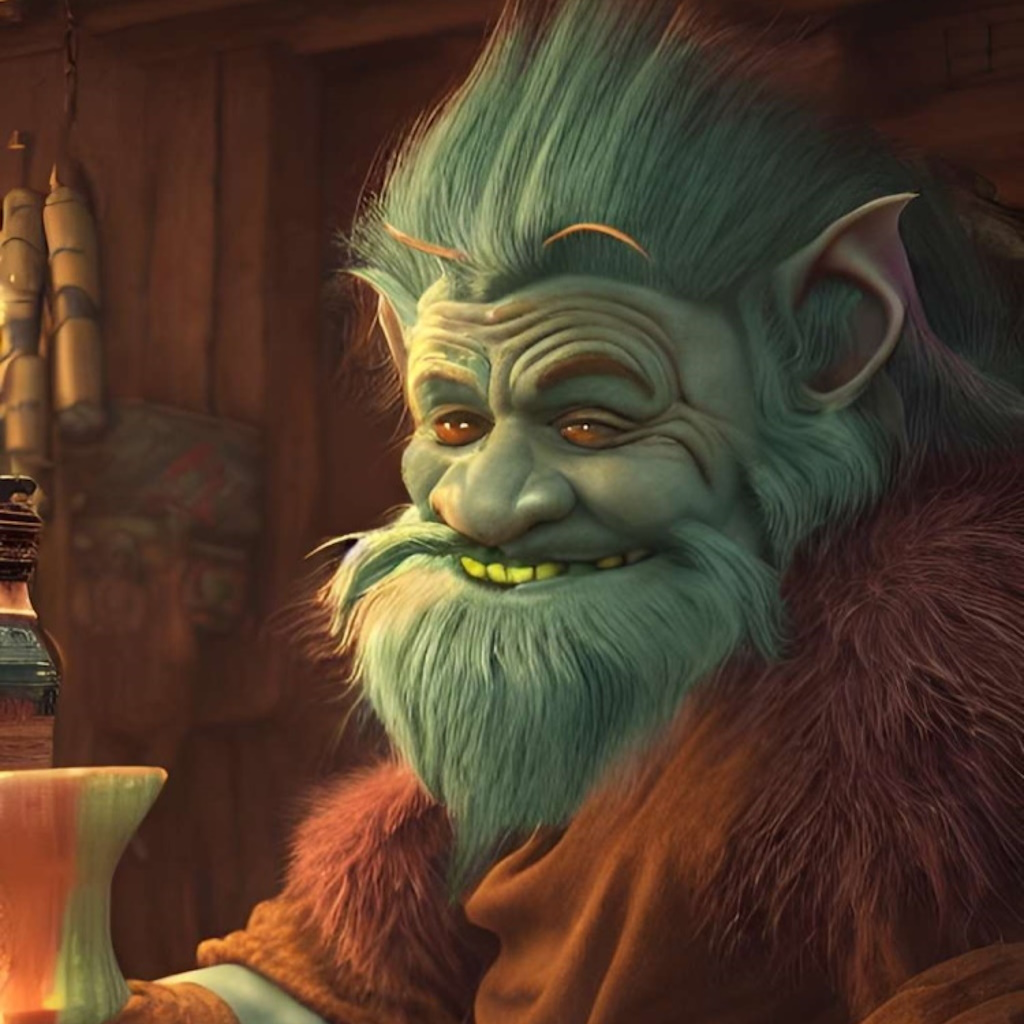
Worrow thrives on attention, admiration, and impossible odds. A natural risk-taker, he secretly manipulates the strange luck woven through Troll bloodlines, allowing him to appear uncannily fortunate in even the deadliest situations.
Somehow Worrow is always exactly where he needs to be. Disasters collapse around him only for him to emerge triumphant, usually with an audience watching. His daring rescues and dramatic entrances have made him wildly popular throughout Beacon despite his reckless tendencies.
Raised in a small Trollan village, Worrow quickly grew restless with quiet living. Seeking fame and adventure, he traveled the world until eventually arriving in Orbin, where his cavalier use of Trollan abilities caused conflict with more traditional Trolls. Forced to flee, he reinvented himself in Permatu.
His ability to find the right treatment for all forms of odd ailments and know where those in need would be found simply by walking there proved invaluable to the cities functions.


